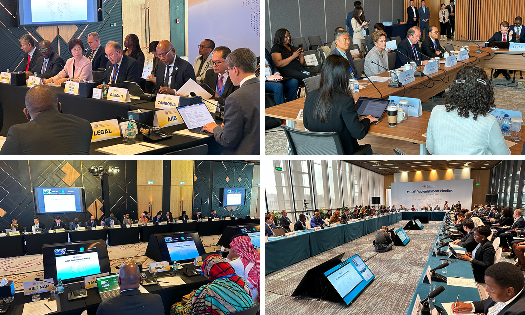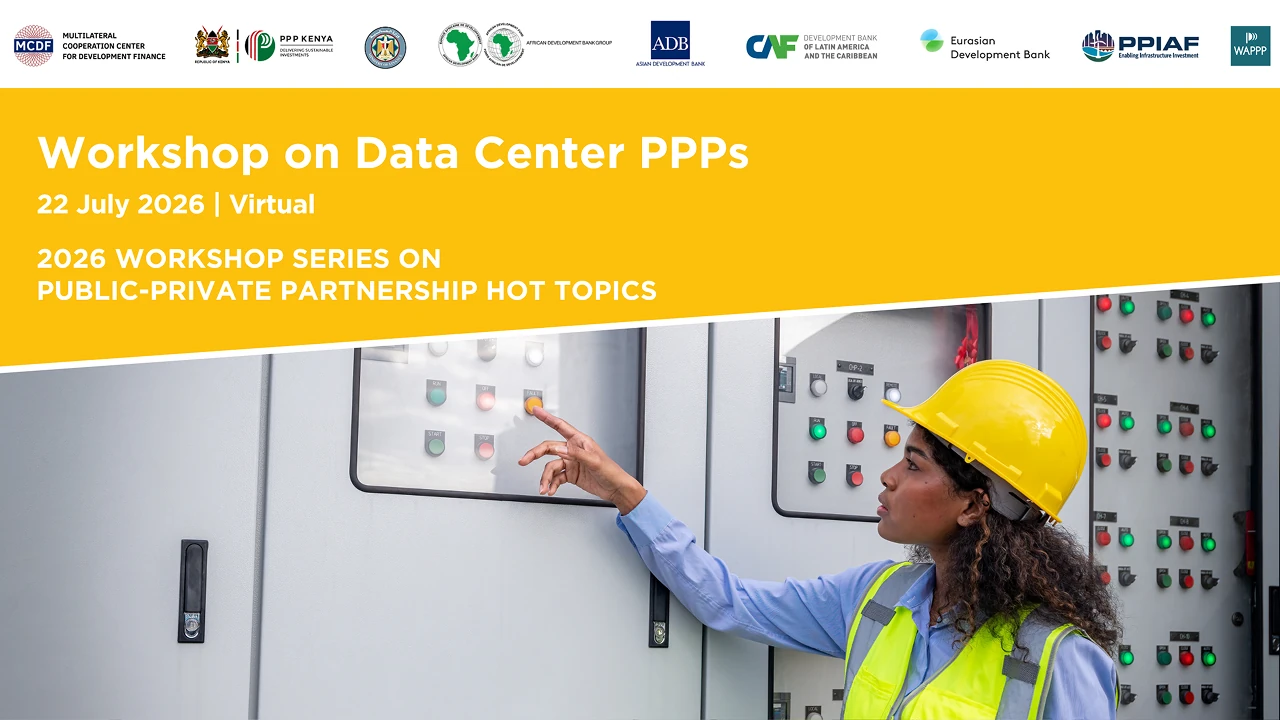
Developing country case studies and lessons learned on data center public-private partnerships (PPPs) were explored during the third and final session of the 2026 Workshop Series on PPP Hot Topics, cohosted by the Multilateral Cooperation Center for Development Finance (MCDF) and partners online on 22 July.
The workshop series was co-organized with Egypt’s Ministry of Finance, the African Development Bank (AfDB), Asian Development Bank (ADB), CAF – Development Bank of Latin America and the Caribbean, the Eurasian Development Bank (EDB), Public-Private Infrastructure Advisory Facility (PPIAF), and World Association of PPP Units and Professionals (WAPPP). The third workshop was also cohosted with the PPP Directorate of Kenya’s National Treasury and once again drew strong and balanced global participation.
View the Recordings of the Workshop on Data Center PPPs
Download the Workshop on Data Center PPPs Speakers’ Presentations
Mr. Ede Iijasz, a Senior Advisor to MCDF’s CEO and the series’ moderator and strategic lead, opened the workshop with a presentation on the rapid growth of artificial intelligence (AI) use and the role of data centers to support it. In welcome remarks, Eng. Kefa Seda, Kenya PPP Directorate Director General, described how the country is working with the private sector to sustainably and efficiently meet data center land permit, power supply, and backup infrastructure needs as it seeks to become a regional data center hub.
The workshop proceeded to feature presentations by PPP practitioners from governments, International Financial Institutions (IFIs), PPP centers, and partners on data center PPP development in developing countries and regions globally. Six key takeaways are outlined below:
- Laws and regulations are crucial enablers of cloud adoption and data center market growth
Ms. Slavina Pancheva, Digital Specialist at the World Bank, explained that a favorable legal environment can help grow and aggregate demand and facilitate cloud adoption to support digital transformation across an economy. It also helps attract cloud and data center investments to serve local and regional markets, she added.
- Dedicated power substations and streamlined permit approvals underpin PPP transaction success
Mr. Douglas Njiraini Gicho, Technical Advisor to Kenya’s Cabinet Secretary for Information, Communications, and the Digital Economy, detailed how Kenya is endeavoring to combine sound policy, strategic partnerships, and an enabling environment to build secure and globally competitive data center infrastructure. He noted that Kenya is prioritizing the bankability of its first data center project, dedicating substations and streamlining approvals to ensure sufficient power supplies, and layering public and concessional capital to pool private investment.
- Data center PPPs need flexibility to adapt to a rapidly changing landscape
Insights from Brazil’s ten-year-old Banco do Brasil-Caixa Data Center project were discussed by WAPPP President Ziad-Alexandre Hayek. He said the project highlights how drawing a concession boundary at an infrastructure layer, rather than a computing layer, reconciles long-term PPP contracts and rapid technology change; initial friction during PPP contract design and tendering is a sign of institutional learning; and transactions can serve as a template for later digital parks. He went on to discuss Lebanon’s attempt to develop its first data center and related lessons. Among them include the importance of rigorous demand analysis to ensure financial viability – a point echoed by other presenters.
- Recurrent spending in cloud services can help realize bankable digital infrastructure demand
Experience in Latin America and the Caribbean shows that demand for services associated with data centers exists in the public sector and can become an anchor client for PPP translations if the demand is aggregated, said Mr. Alejandro Forero Guzmán, Principal Specialist in Digital Transformation at CAF. Existing payments by public agencies can provide cash flow for a PPP transaction that is not entirely local but needs critical infrastructure control and government recognition of data centers’ role in promoting broader digital ecosystems, he added.
- The private sector is keen to invest in data centers with minimal government subsidies
Mr. Ekow Coleman, Senior Infrastructure Finance Specialist at the Global Infrastructure Facility, said data centers are increasingly viewed as a hybrid real estate and infrastructure asset class. He discussed how data center transactions are driven by AI and cloud adoption and institutional investors value them for stable, long-term lease revenues with high-credit tenants. But he noted that secure power availability and a creditworthy “off-taker” are needed to make a PPP transaction bankable, describing how this applies in Kyrgyzstan and other developing countries.
- Regional data centers with “digital embassies” could be a viable option for small countries
Insufficient demand in small countries may undermine the commercial viability of having their own data centers and outsourcing to a bigger, more experienced data center provider can provide greater cybersecurity protection, workshop participants agreed. They also said data sovereignty can be upheld through a “digital embassy” in which a regional data center follows a given country’s data governance rules and that the Caribbean is currently strong in this regard.
The 2026 Workshop Series on PPP Hot Topics previously covered capacity building lessons in session one on 13 May and innovations in PPP transaction design in session two on 17 June, with active engagement from participants during all three workshop series sessions.
Contact
David Hendrickson
Senior Communications Officer
Mobile: +86 185 0114 6758
david.hendrickson@themcdf.org