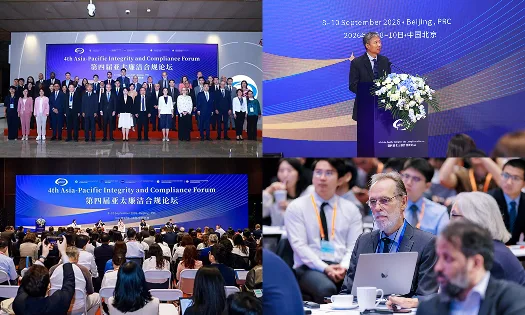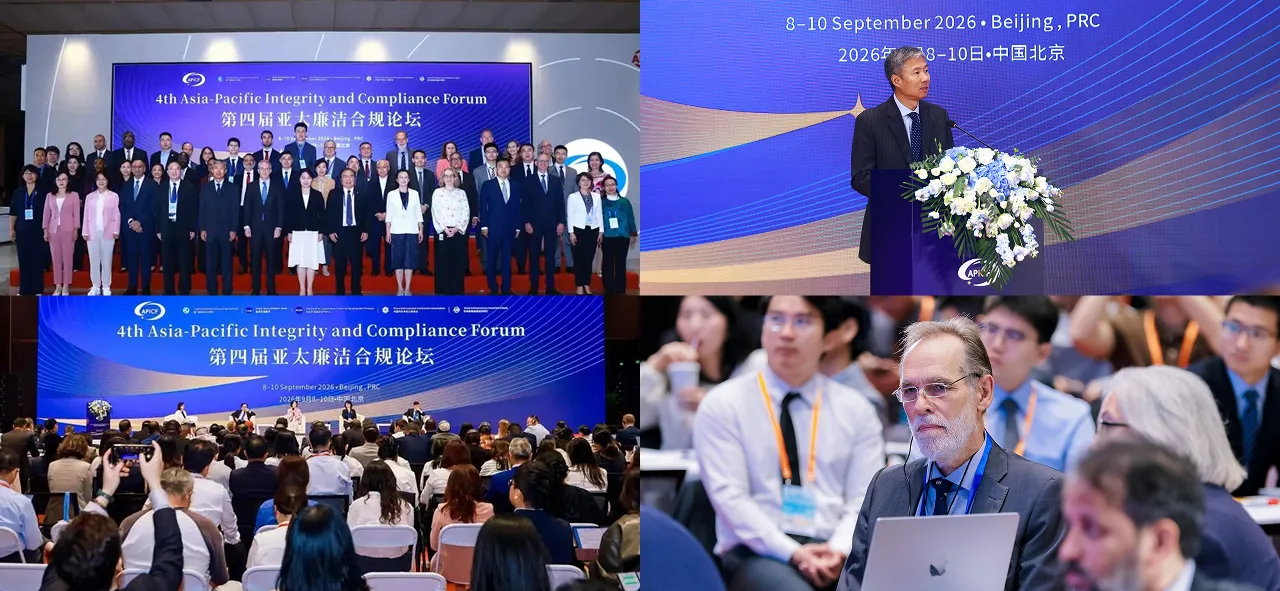
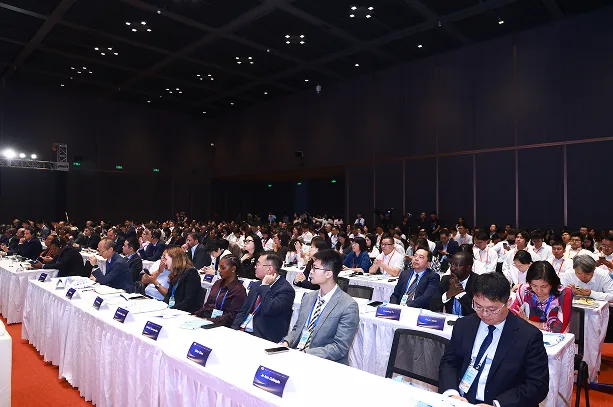
The latest lessons and approaches to help contractors apply international integrity and compliance standards in infrastructure projects needed to ensure they are high quality and can secure International Financial Institution (IFI) financing were examined during the Fourth Asia-Pacific Integrity and Compliance Forum in Beijing and online on 8-10 September. It was cohosted by the Asian Development Bank (ADB), Multilateral Cooperation Center for Development Finance (MCDF), China International Contractors Association (CHINCA), and Asian Infrastructure Investment Bank (AIIB).
Download the Forum Speakers’ Presentations
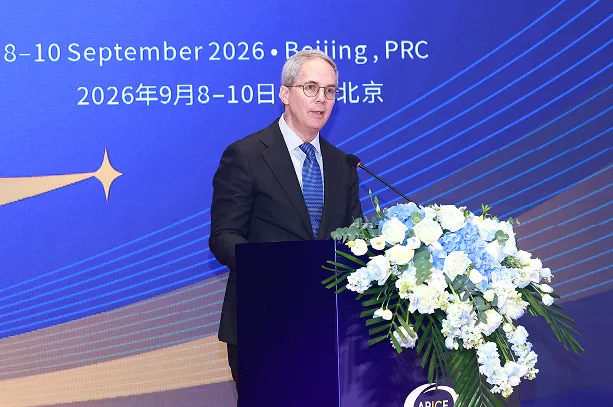
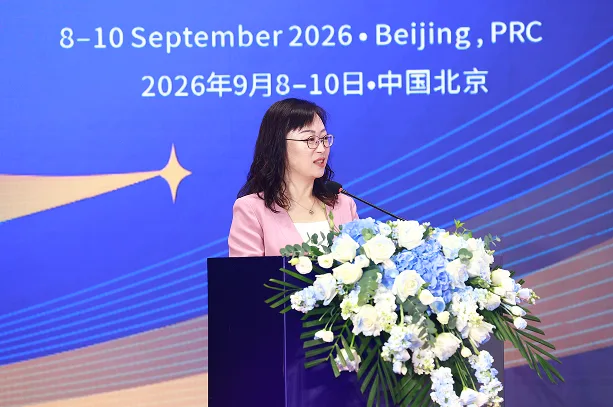
The forum provided a platform for engagement between contractors and attending heads of integrity from the African Development Bank, ADB, and AIIB, as well as integrity staff from the European Bank of Reconstruction and Development, New Development Bank (NDB), and World Bank. In opening remarks, Ms. Junhong Chang, China’s Assistant Finance Minister, described IFI project participation as crucial for building firms’ knowledge of international standards and capacity to adopt them. ADB Vice President Scott Morris noted the importance of trust for opening business opportunities that underpin sustainable development, while MCDF CEO Zhongjing Wang emphasized the value of IFI-contractor collaboration for narrowing gaps between strong integrity policies and their implementation.
“Contractors deliver projects and understand the situation on the ground, while IFIs bring financing built on international standards and good practices,” said CEO Wang. “Enhancing knowledge sharing aimed at turning IFI procurement and integrity policies into practice is central to MCDF’s mission to promote high-quality connectivity infrastructure investment in developing countries through partnerships.”
Ms. Xiang Zhang, CHINCA Vice Chairperson, called for mutual recognition of compliance certifications and credit assessments and greater regional capacity building to meet sustainable finance requirements. Ms. Carmen Nonay, Managing Director of AIIB’s Complaints Resolution, Evaluation, and Integrity Unit, said IFI consideration of contractors’ views on operational challenges can help to reduce project costs, delays, and compromised safety by limiting integrity failures.
The forum went on to feature panel discussions, case study-focused workshops, a business opportunities fair in which IFI representatives shared procurement opportunities and strategies, and a law firm session convening legal practitioners and IFI integrity experts to discuss regulatory and policy developments in the international and Chinese integrity landscape. Below are six key takeaways from the forum:
- Integrity and compliance controls must be able to address commercial pressure
Workshops on integrity as a growth advantage and aligning international business with integrity standards illustrated how poor due diligence, incentives, and decision-making can raise commercial pressure on infrastructure projects and lead to negative outcomes. Participants highlighted practical safeguards such as verifying beneficial ownership and bidder independence. Controls should continue throughout the project lifecycle, they added.
- Aim for proportionate management of conflicts and third-party risks
The relevance of relationships, influence, information access, and broader context were underscored during sessions on conflicts-of-interest and due diligence. Participants explained that actual, potential, and perceived conflicts require assessment, while acknowledging that a connection does not automatically disqualify a firm. Early disclosure to IFIs preserves mitigation options and is ideally followed by documented action and reassessment, they agreed.
- Prioritize trusted reporting and timely action
An integrity reporting channel is useful only if people trust the process, said participants in the forum’s reporting sessions. The priorities are to protect the reporter, preserve evidence, involve the right decision-makers, and document a proportionate response, including timely IFI engagement where credible concerns remain, they added. The legal practitioners’ roundtable advised the use of culturally-tailored communication and anonymous reporting protections.
- Integrity in project delivery is a shared responsibility
A panel on integrity culture, partnerships, and collaboration identified how access to different information, different interpretation of the same data, and a lack of reciprocity in some contracts can undermine trust and collaboration between stakeholders. During the legal practitioners’ roundtable, IFI representatives clarified sanctions arrangements. Participants agreed that regular local lawyer-IFI compliance team dialogue can reduce information gaps and boost coordination.
- Technology and evidence and human accountability
Connecting due diligence, procurement, and contract and payment records can help to identify inconsistencies and trace decisions, said participants in a panel on technology and toolkits. Artificial intelligence can assist with pattern recognition and workflow, but poor data, excessive alerts, and opaque outputs can create additional risks, they noted. Participants agreed that defined-use cases, reliable data, and explicit human responsibility are essential.
The forum closed with a look at the changing IFI procurement landscape. Presentations by experts from the World Bank, ADB, AIIB, and NDB highlighted their banks’ growing emphasis on quality, sustainability, and delivery capability, in addition to cost. Contractors were advised to engage before procurement arrangements are fixed, distinguish minimum qualification requirements from scored evaluation criteria, and prepare project-specific proposals.
Above news release photo collage caption (clockwise, from the upper left position): Forum participants; Mr. Zhongjing Wang, CEO, MCDF; Forum panel; Mr. Hamish Goldie-Scot, Senior Anticorruption Adviser, MCDF

Contact
David Hendrickson
Senior Communications Officer
Mobile: +86 185 0114 6758
david.hendrickson@themcdf.org