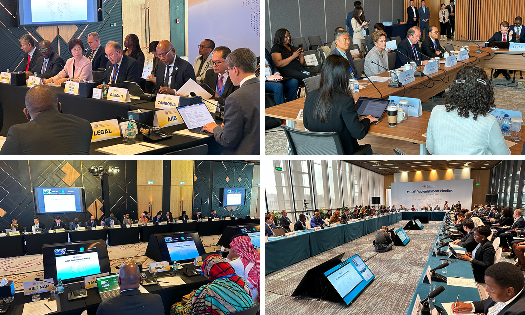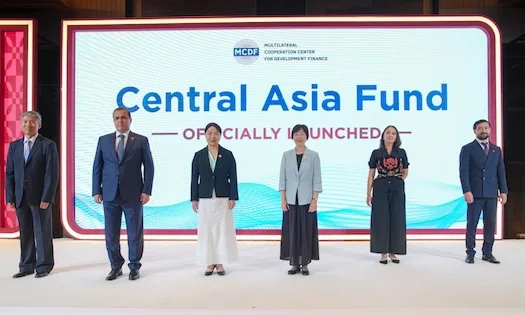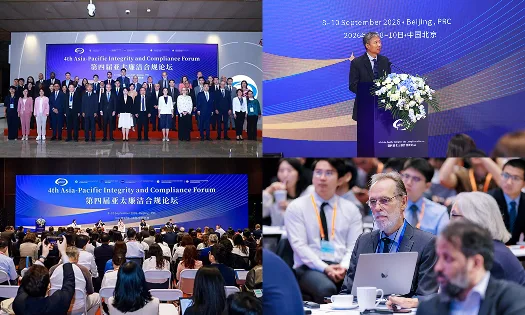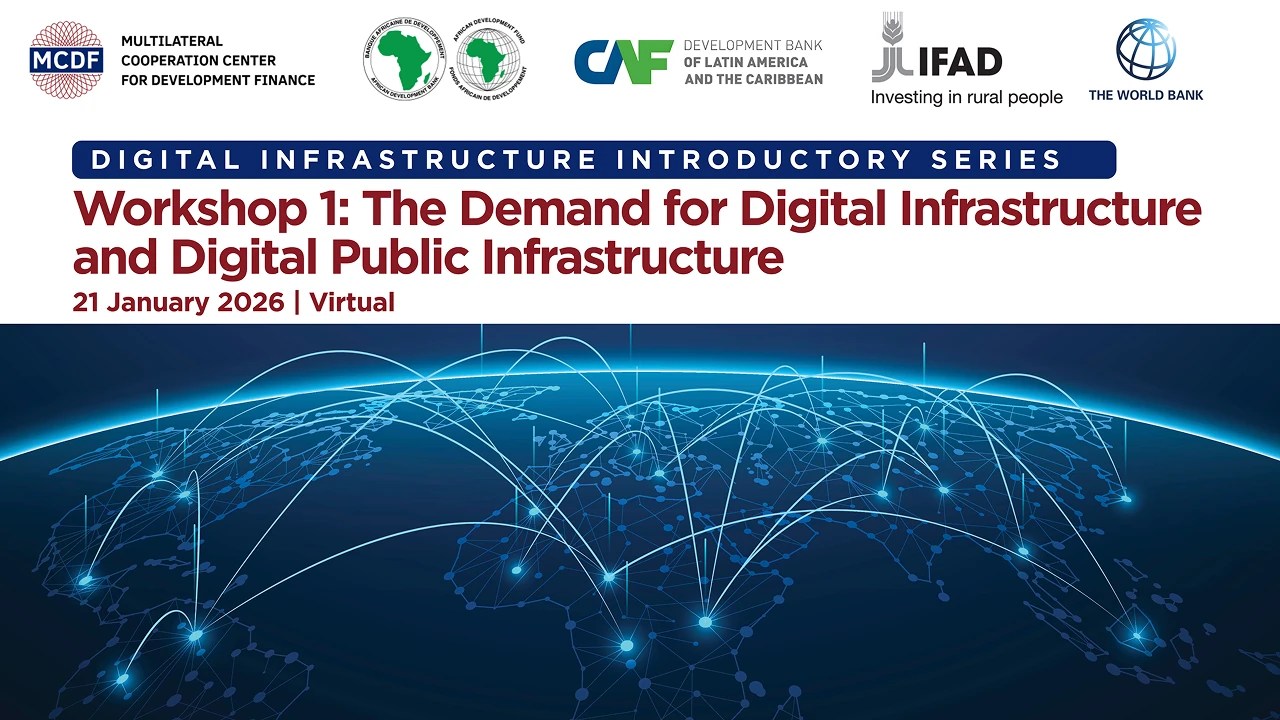
The Multilateral Cooperation Center for Development Finance (MCDF) and International Financial Institution (IFI) partners launched the virtual four-part Digital Infrastructure Introductory Workshop Series on 21 January.
Cohosted with the African Development Bank (AfDB), CAF—Development Bank of Latin America and the Caribbean, the International Fund for Agricultural Development (IFAD), and World Bank, the workshop series aims to bridge digital infrastructure (DI) knowledge gaps and spotlight ways ministry officials, financiers, and stakeholders can support DI growth in developing countries.
The first workshop focused on key foundational concepts and different aspects of DI, such as networks and data centers, and shared, interoperable digital public infrastructure (DPI) that is increasingly becoming the infrastructure foundation of government service delivery to citizens. It further explored DI and DPI prioritization and good practices in developing countries, highlighting the important role governments can play in the sector’s strategic development, investment, and technical harmonization.
View the Workshop 1 Video Recordings
In a high-level panel, H.E. Hon. William Kabogo Gitau, E.G.H., Kenya’s Minister of Information, Communications, and the Digital Economy (officially referred to as “Cabinet Secretary”), said that the country seeks to achieve universal connectivity and ensure service delivery for all through DPI systems that are resilient, interoperable, and integrated both domestically and across the East African Community.
Argentina’s Secretary of Innovation, Science, and Technology, Mr. Darío Genua, described how the global digital revolution is forcing governments to adapt and identify solutions to unlock DI and DPI growth, such as legal identification as an entry point for service delivery. Authentication of data can be done using blockchain technology, while governments must ensure the interoperability of infrastructure, he explained.
Advisor to Nigeria Minister of Communications, Innovation, and Digital Economy, Mr. Lanre Kolade, discussed the country’s Building Resilient Digital Infrastructure for Growth (BRIDGE) project for achieving universal broadband and enhanced regional digital connectivity, the feasibility study of which is being funded by a USD2.6 million MCDF grant and implemented by AfDB. He noted the commercial nature of DI, differentiating it from DPI, and how large DPI projects can be financed through public-private partnerships with private sector DPI design support.
Asian Infrastructure Investment Bank Vice President Ajay Pandey examined the Aadhaar identification number and Unified Payments Interface systems in India, which he said pioneered the country’s DPI. He explained how DPI can be developed with limited resources and help improve resource efficiency. Such systems promote financial inclusion, reduce welfare “leakages,” and simplify inter-ministerial processes, Vice President Pandey noted. They hinge on government vision and the mobilization of private sector knowledge and funding, he added.
A subsequent presentation by Prof. David Eaves of University College London defined DPI as a public good that relies on economic efficiencies. He emphasized that DPI must allow interoperability and serve all ministries to avoid duplication and higher costs, while data ownership is safeguarded by the government. It is imperative for IFIs, which tend to favor duplicative project-specific infrastructure, to adapt this approach, he continued.
“This is a unique moment in how governments, International Financial Institutions, and partners approach digital connectivity and its role in development,” said MCDF CEO Zhongjing Wang in welcome remarks. “Digital infrastructure must be at the forefront of planning and national development to drive employment, economic competitiveness, public service delivery, and sustainable development.”
Building an understanding of digital infrastructure and digital public infrastructure, good practices in developing, financing, and regulating them, and collaboration opportunities via information sharing are what the DI workshop series is all about and reflects MCDF’s broader mission to promote high-quality connectivity infrastructure investment in developing countries through partnerships, CEO Wang said.
Mr. Ivan Rossignol, a senior advisor at MCDF and the workshop series moderator and strategic lead, presented the outlook for DI and DPI demand, noting that large underserved areas persist globally. Active support for DI and DPI development and financing among governments and IFIs, with DPI serving as a common foundation, is essential to overcoming the scarcity of public resources, he concluded.
Contact
David Hendrickson
Senior Communications Officer
Mobile: +86 185 0114 6758
david.hendrickson@themcdf.org