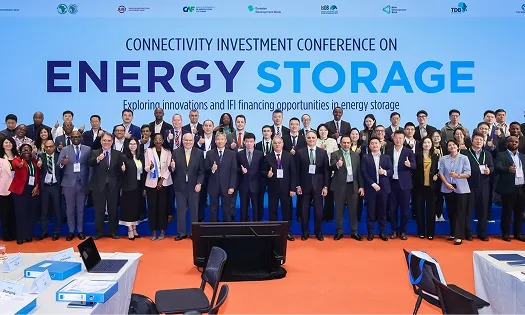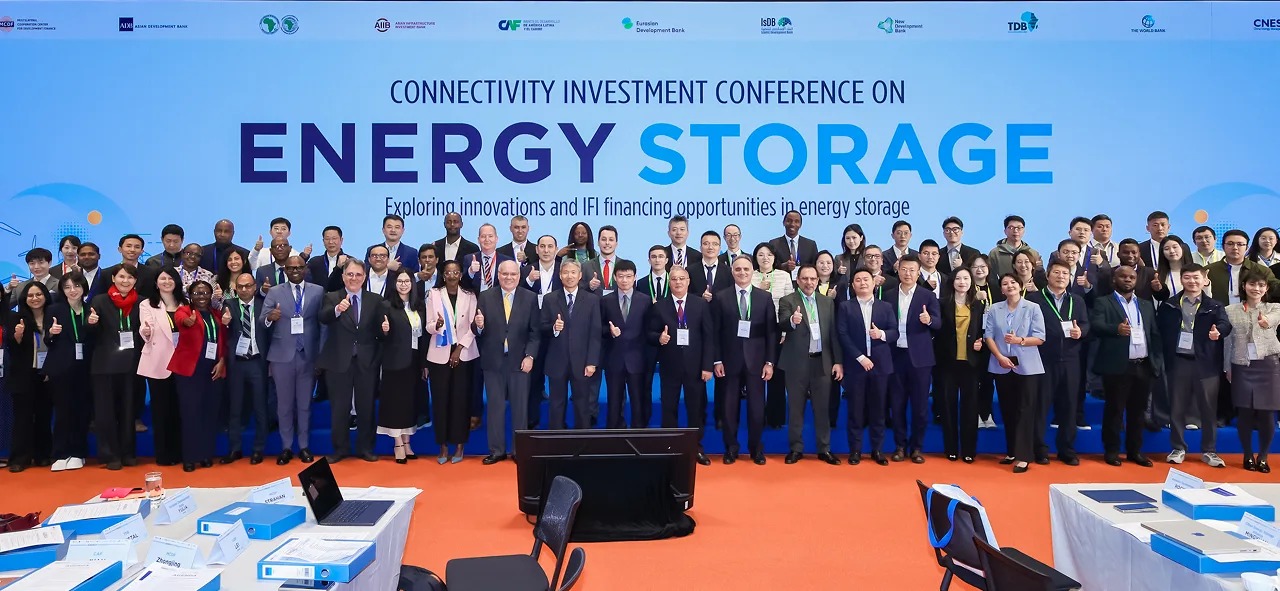
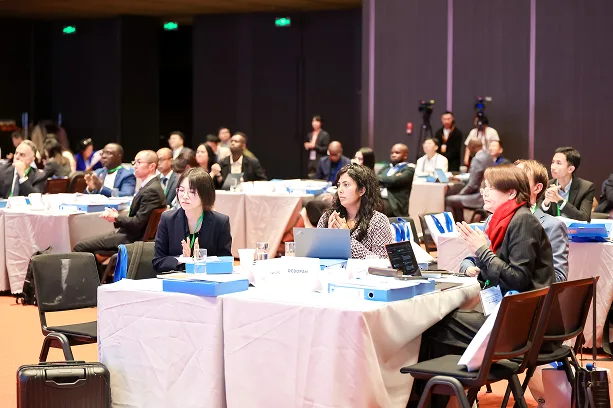
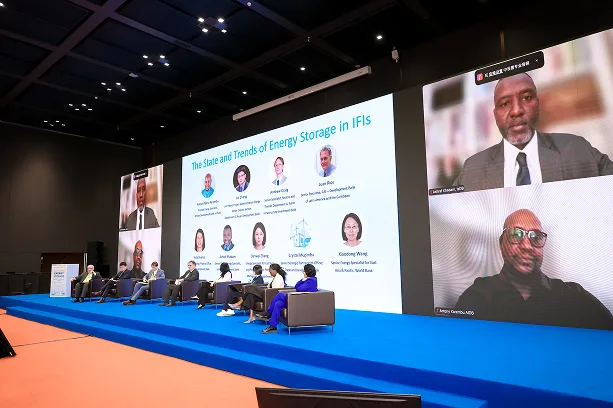
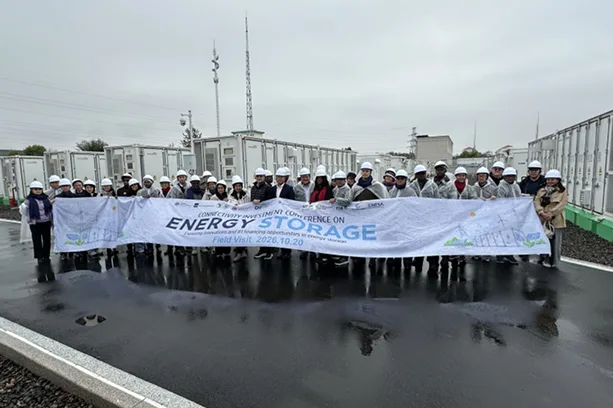
Innovation, policy, and financing trends and lessons for meeting energy storage demand in developing countries, and enabling solar and wind-generated electricity delivery to consumer markets, were explored during the Connectivity Investment Conference on Energy Storage held in Beijing on 21-22 October, cohosted by the Multilateral Cooperation Center for Development Finance (MCDF), nine International Financial Institutions (IFIs), and the China Energy Storage Alliance (CNESA). It was preceded by field visits to energy storage system and production facilities in neighboring Tianjin on 20 October.
Among the conference participants included staff from the cohosting IFIs: the Asian Development Bank, African Development Bank, Asian Infrastructure Investment Bank (AIIB), CAF – Development Bank of Latin America and the Caribbean, the Eurasian Development Bank, Islamic Development Bank, New Development Bank, Eastern and Southern African Trade and Development Bank, and World Bank. Together with CNESA member representatives, country officials, financiers, and other private sector experts, participants shared knowledge aimed at building capacity to prepare bankable, high-quality energy storage projects critical to sustainable energy connectivity infrastructure development.
Download the Conference Speakers’ Presentations
View Photo Galleries of the Conference and Field Visits; Select Photos Displayed Below
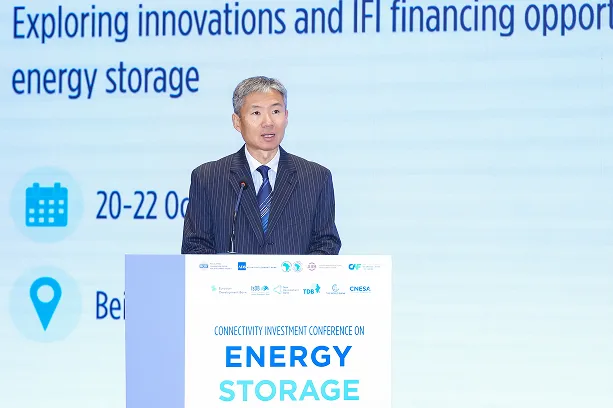
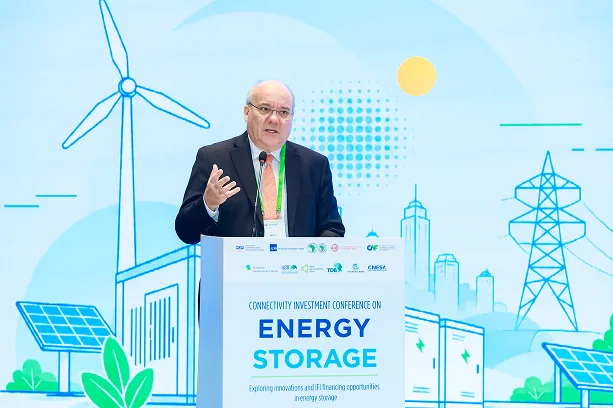
“The increasing share of solar and wind-generated electricity requires greater flexibility from storage, grids, and demand response in the form of ‘energy shifting’ to move electricity from periods of abundant generation to periods of high demand,” said MCDF CEO Zhongjing Wang, in opening remarks. “Energy storage growth and development needs go hand-in-hand with MCDF's mission to promote high-quality connectivity infrastructure investment in developing countries through partnerships, CEO Wang added.
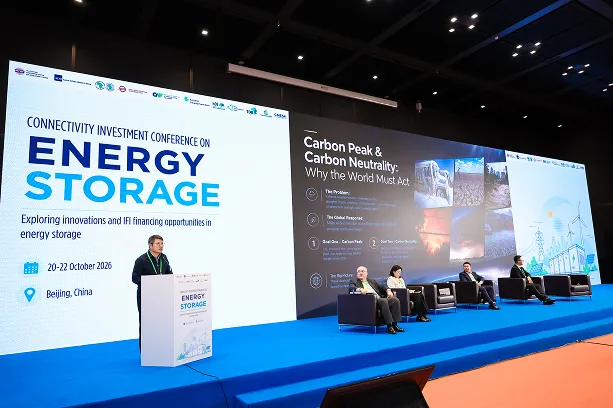
The conference moderator and strategic lead was Mr. Ede Ijjasz, Senior Advisor to MCDF’s CEO. He noted the value of the event’s large number of IFI cohosts, which bring standards, expertise, and financing that can help make high-quality energy storage projects a reality. Insights and lessons stemming from the sector’s rapid scale-up in China were also spotlighted.
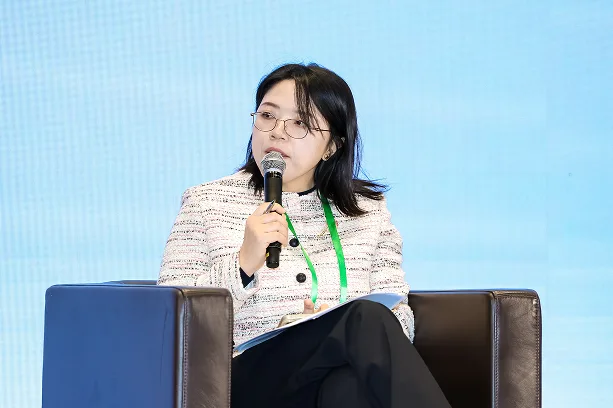
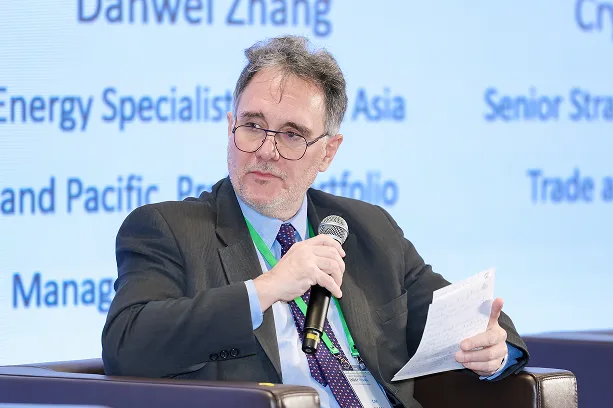
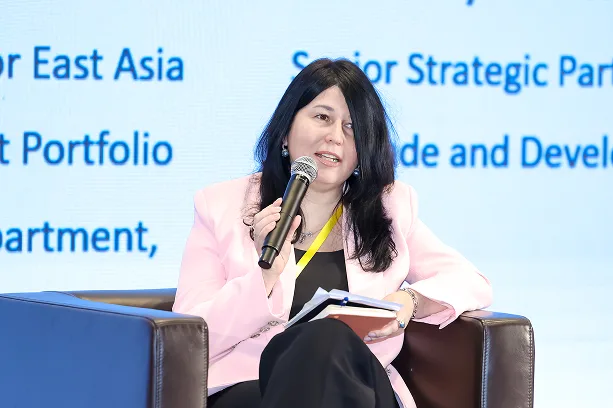
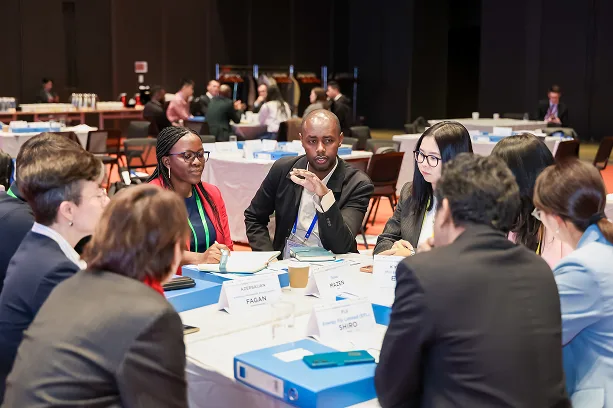
Presentations, panel discussions, country roundtables, and question and answer sessions examined energy storage trends in IFIs and developing markets; financial models and investments in energy storage; policy, regulations, and markets for energy storage; and the development of China’s energy storage sector from an industry perspective.
5 key conference takeaways:
- Storage is becoming a core element of power-system development as renewable generation expands.
Falling battery costs and broader applications are strengthening energy storage's role in managing variability, reducing curtailment, and improving reliability, conference participants explained. Uzbekistan’s deployment and Indonesia’s planned solar-plus-storage programs were identified as examples of this change, while China’s experience helped show how storage is expanding into standalone grid assets and industrial applications. Longer storage durations and emerging technologies are expanding the range of services available, participants added.
- The right storage solution depends on the grid service and required duration.
Country presentations illustrated how different energy storage systems cater to different needs. It was explained that a larger system on Fiji’s Viti Levu Island primarily requires shifting solar energy to meet evening consumer demand, whereas a smaller grid on Labasa Island needs frequency and voltage support. It was noted that in Kenya, planned batteries are expected to shift curtailed geothermal output to address peak consumer demand in the evening. In all cases, system decisions should consider lifecycle costs and the value of services delivered, participants agreed. The preferred mix can change as renewable penetration and demand grow, they added.
- Mobilizing investment requires credible revenue projections and appropriate risk allocation.
Participants described how long-term contracts need creditworthy buyers and clear allocation of technology, construction, and operating risks. Indonesia’s experience demonstrated the potential for regulatory uncertainty and project-readiness gaps to delay financing, and the importance of diversified funding sources. The AIIB-financed Uzbekistan portfolio illustrated how financing several storage projects together can support commercial lender participation. It was noted that public and concessional resources can help prepare projects and address risks in nascent markets, while established projects and markets can draw on commercial capital.
- Reliable lifetime performance requires procurement standards and capable institutions.
Battery degradation, thermal management, and fire safety were highlighted as operating challenges to be integrated into procurement strategy. Suppliers emphasized the importance of warranties, spare parts, local maintenance, and clear performance responsibilities. Contracts should specify usable capacity, efficiency, dispatch limits, and maintenance obligations, supported by training and monitoring, and parties should agree on end-of-life responsibilities from the outset, it was noted. Taiyuan Wusu International Airport, in Taiyuan, China, was cited as an example of how pilot and operating data can guide energy storage expansion.
- Storage plays a critical role in IFIs’ energy connectivity infrastructure portfolios.
IFI staff presentations and project examples pointed toward broader storage portfolios and closer integration of financing with policy reform and technical support. They detailed the rapid growth of energy storage portfolios across IFIs and the varying instruments IFIs offer to client countries, ranging from grants and concessional finance to equity investments and guarantees.
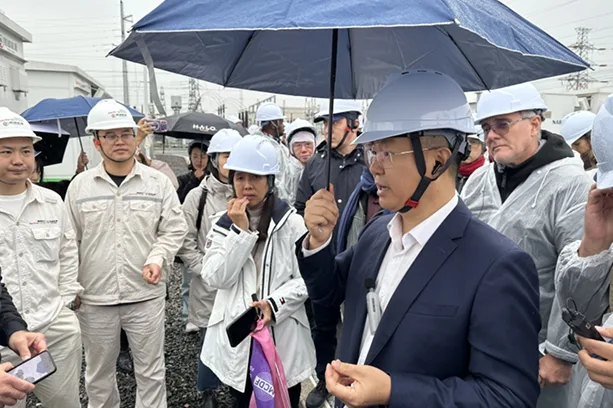
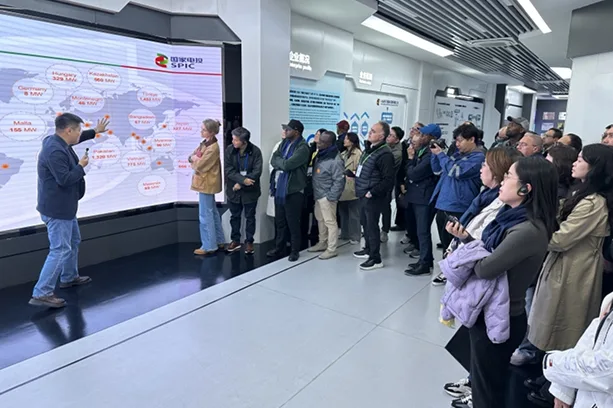
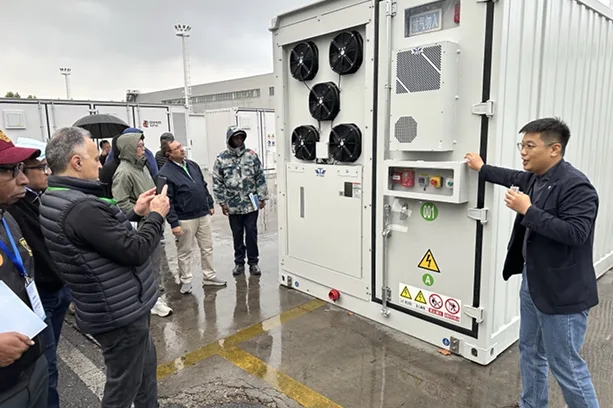
Setting the tone for the conference discussions were guided field visits to the Wuqing Battery Energy Storage System Station and the XYZ Energy Storage Company, in Tianjin.
Select photos from the full galleries for the conference and field visits displayed below:

Contact
David Hendrickson
Senior Communications Officer
Mobile: +86 185 0114 6758
david.hendrickson@themcdf.org