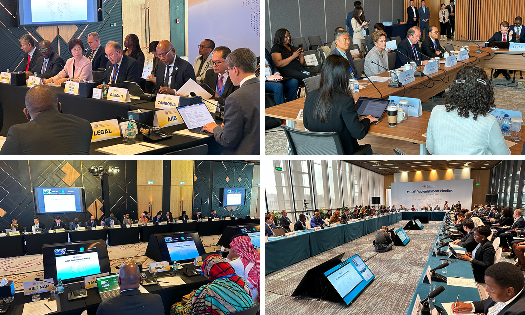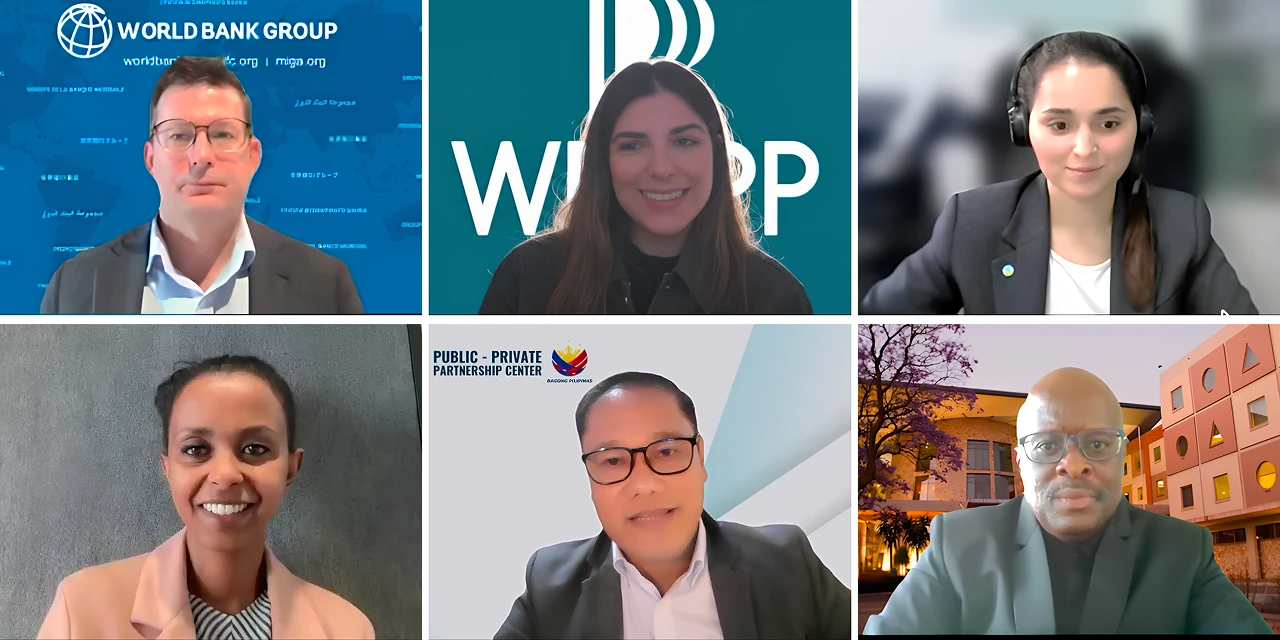
Lessons and good practices for building capacity to implement public-private partnerships (PPPs) that can deliver more bankable, high-quality infrastructure projects in developing countries were highlighted during the first session of the 2026 PPP Hot Topics Workshop Series, cohosted by the Multilateral Cooperation Center for Development Finance (MCDF) and partners online on 13 May.
The three-part workshop series builds on popular series sessions held in 2024 and 2025, which are unpacked in the new MCDF PPP hot topics report. The 2026 workshop series is co-organized with Egypt’s Ministry of Finance, the African Development Bank, Asian Development Bank, CAF – Development Bank of Latin American and the Caribbean, the Eurasian Development Bank (EDB), Public-Private Infrastructure Advisory Facility (PPIAF), and World Association of PPP Units and Professionals (WAPPP).
View the Recording of the Workshop on PPP Capacity Building
Download the Workshop Speakers’ Presentations
Moderated by Mr. Ede Ijjasz, Senior Advisor to the MCDF CEO and the workshop series’ strategic lead, the opening workshop featured presentations from experienced PPP practitioners from governments, International Financial Institutions (IFIs), and partners. Six key takeaways are outlined below:
- Updated APMG CP3P Certification Remains Leading PPP Qualification
Mr. Sam Barr, Infrastructure Specialist at the World Bank and PPIAF’s Global Knowledge Lead, presented the IFI-endorsed APMG CP3P certification program. He described the leading PPP qualification program’s recent updates, covering gender, fiscal risks and contingent liabilities, and enhanced contract management guidance. Workshop participants discussed how the qualification is increasingly recognized as a signal of core PPP expertise, with Kazakhstan and some other countries starting to use it to certify company eligibility to advise the government on PPPs.
- Mixed Learning Supports Effective Capacity Building
Ms. Jinane Ghosh, a WAPPP Executive Committee member and Co-Chair of the Young PPP Professionals Chapter, and Ms. Feven Tewolde, Program Manager at the Africa Infrastructure Fellowship Program, discussed their initiatives’ capacity building approaches. They highlighted how their programs are effectively applying a combination of learning tools, including peer-to-peer engagement, targeted knowledge sharing, communities of practice, and mentoring.
- Learning-By-Doing Through Projects
Overviewing EDB’s PPP capacity building experience, Ms. Vera Barkatina, Head of EDB’s Technical Assistance Coordination Office, emphasized the value of learning-by-doing. She described EDB’s focus on capacity building programs anchored in real sectors, projects, and pipelines.
- PPP Centers and Partners Have a Collective Role to Play
Mr. Eleazar Ricote, Assistant Secretary of the Philippines Department of Economy, Planning, and Development and Deputy Executive Director of the Philippines PPP Center, detailed his center’s rolling training program for national and local implementing agencies and provision of private sector training. He said PPP centers and partners must collectively ensure the capacity of all infrastructure agencies and the wider PPP ecosystem within a country, covering developers, contractors, and consultants.
- Capacity Can Come from Outside
There is sometimes justification to outsource PPP capacity building, as South Africa does given its moderate volume of PPP transactions, explained Mr. Sithembiso Mkhwanazi, Senior Manager of Performance Monitoring and Evaluation, Government Technical Advisory Center (GTAC) at South Africa’s National Treasury. He said that PPPs in the country are supported by a tripartite structure of the implementing department, hired transaction advisors, and GTAC’s PPP Unit.
- Aligning AI Opportunities and Traditional Engagement is Imperative
Mr. Ijjasz and the opening workshop’s participants agreed that artificial intelligence (AI) will change the delivery and effectiveness of PPP capacity building programs. They discussed how AI will allow personalized training and the easy generation of PPP case studies and scenarios to make it more practical. But they said that face-to-face interaction and experience sharing will remain core to PPP training’s success.
Contact
David Hendrickson
Senior Communications Officer
Mobile: +86 185 0114 6758
david.hendrickson@themcdf.org